
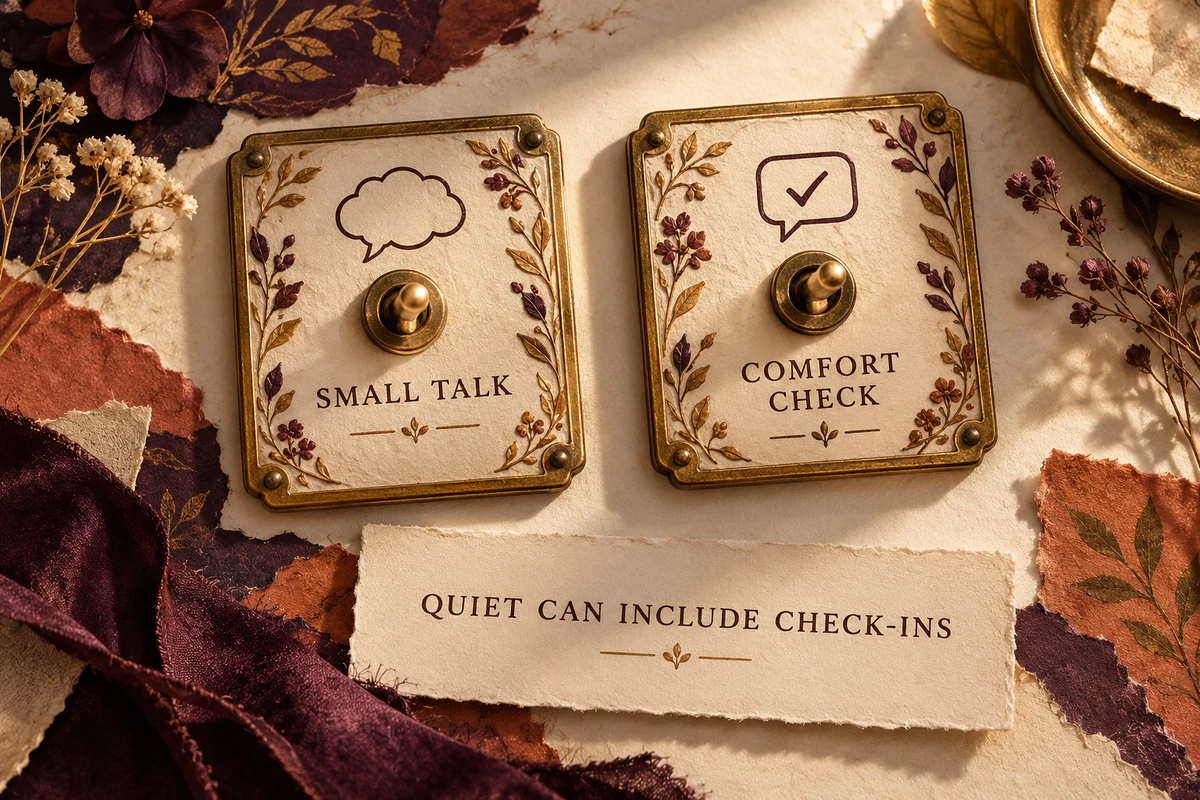
You can talk during a massage, or ask for a quiet session. You do not owe the therapist small talk. Keep essential communication open: questions about pressure, comfort, position and consent still matter when you would prefer silence.
The American Massage Therapy Association's session guide describes the client's choice about conversation, music and quiet. The practical trick is to say what you prefer rather than hoping the therapist will interpret a hint.
Use one clear sentence at the start
“I'd like a quiet treatment today, with the usual comfort checks, please.” That is enough. You do not need to invent a headache, apologise for being unsociable or explain why you have used up your energy talking at work.
Fire & Earth's explanation distinguishes relaxing in silence from the necessary questions about pressure, focus areas and positioning. Its account concerns its own service, but the distinction is useful when expressing your preference anywhere.
Ask how the therapist normally checks comfort so that a short question does not feel like an unexpected return to conversation.

Four phrases for four different needs
Choose the sentence that describes what you actually want. A request for quiet does not communicate that pressure is too firm; a polite “I'm fine” does not ask for an adjustment.
| What you want | Words you can use |
|---|---|
| Less small talk | “I'd like to be quiet for the rest of the treatment.” |
| A change in pressure | “Please use less pressure in that area.” |
| A break | “Can we pause for a moment?” |
| An explanation | “Before we continue, can you explain what happens next?” |
These are suggested phrases, not quotations from customers. You can use your own words; clarity matters more than sounding polished. If you want the treatment to stop, say that directly instead of framing it as a request for slightly less pressure.
You can change your mind halfway through
You may enjoy a conversation at the beginning and then want silence. Say so at the next natural pause or interrupt if needed. Being friendly earlier does not commit you to chatting for the whole appointment.
The opposite is also fine. If you have a question after asking for quiet, ask it. The agreement is about your current preference, not a rule that stops you speaking. You do not have to wait until you are dressed to raise something affecting the appointment.
For a familiar therapist, keep the request just as simple: “Lovely to see you; I'm in need of a quiet one today.” An established friendly relationship does not remove your choice.
Comfort checks are different from small talk
A question such as “Is that pressure comfortable?” gives you a chance to make an adjustment. Answer honestly even if you would otherwise like silence. The AMTA guidance also recognises the option to request changes and stop treatment.
If it is difficult to speak in a particular position, agree a simple way to get attention before settling. Do not assume that a therapist can read every change in breathing or posture as a precise instruction. A brief word or an agreed signal is clearer.
Decide about music without making it awkward
If background sound distracts you, mention it alongside the conversation preference. Ask what can be adjusted in that treatment space rather than assuming complete silence is possible. The answer may affect which appointment you choose.
Avoid using headphones as an unspoken barrier to necessary communication. If you would like to use them, discuss how you will hear check-ins first. Similarly, if you expect to become sleepy, our guide to drifting off during massage helps you agree waking and the finish beforehand.
Make the whole visit easier to ask about
Questions about clothing, draping and the trip home deserve the same straightforward approach. The back-massage clothing guide covers those decisions; the before-massage food guide helps with planning an after-work slot.
Mesmerising Beauty is at 77 High Street, Gosforth. If you are coming from Jesmond or elsewhere in Newcastle and quiet is an important part of your choice, ask about the appointment before selecting current massage services and booking. This guide gives you language for the conversation, not confirmation of sound levels or a particular therapist's routine.
Frequently asked questions
Q: Do I have to explain why I do not want to talk?
A clear preference is enough. Ask for a quiet treatment while keeping questions about comfort and the service open.
Q: Can I interrupt after asking for silence?
Yes. A quiet-session preference does not prevent you asking questions, requesting a change, pausing or stopping.