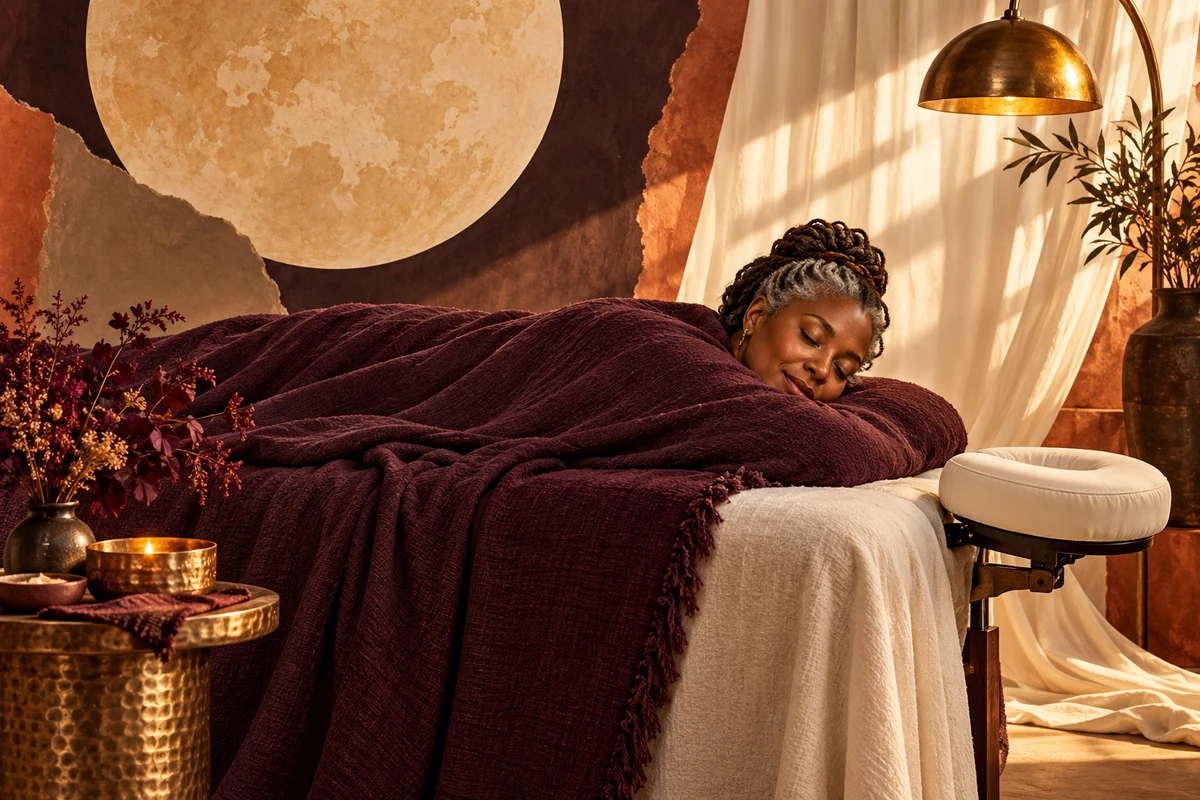
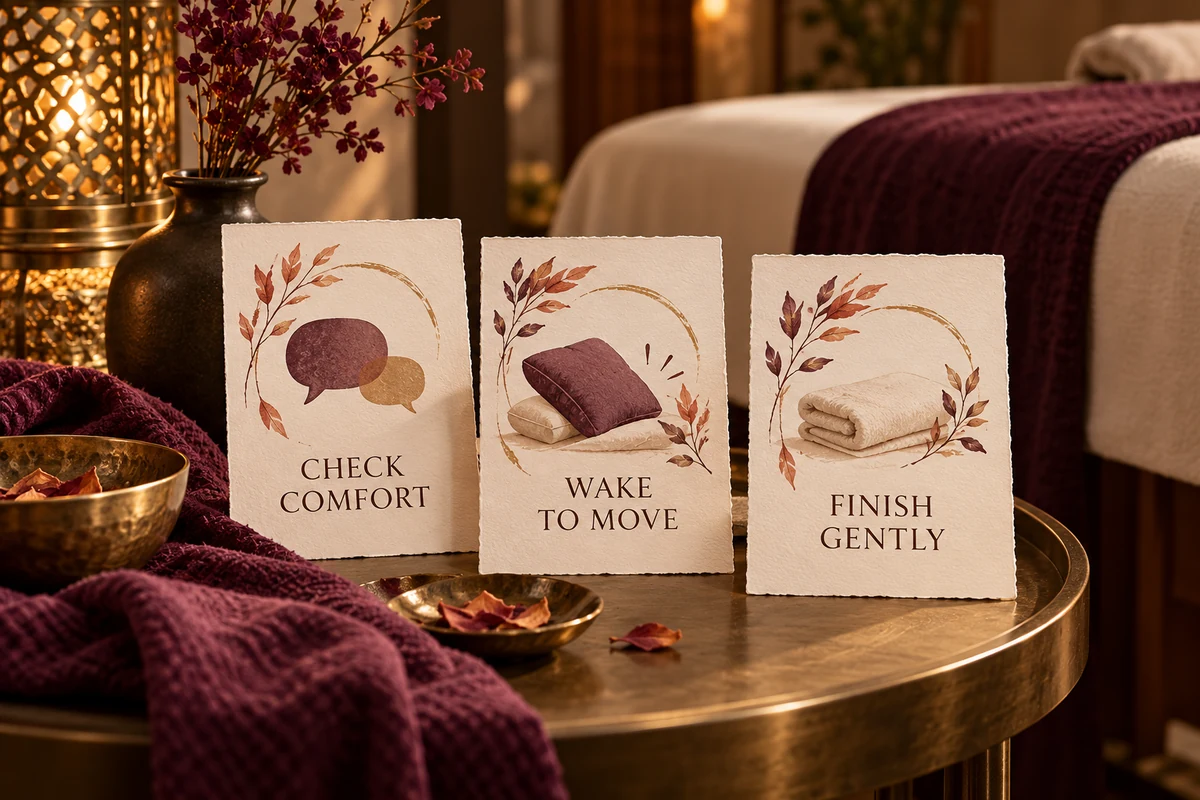
You can fall asleep during a relaxation massage, and you do not need to apologise for feeling drowsy. Tell the therapist beforehand if you think you might drift off. Agree how they will check comfort, wake you to change position and let you know the session has ended.
Massage Envy's relaxation-massage page specifically reassures clients about falling asleep. That is reassurance about an experience, not a promise that a massage will make you sleep or treat a sleep problem.
Agree three things while you are awake
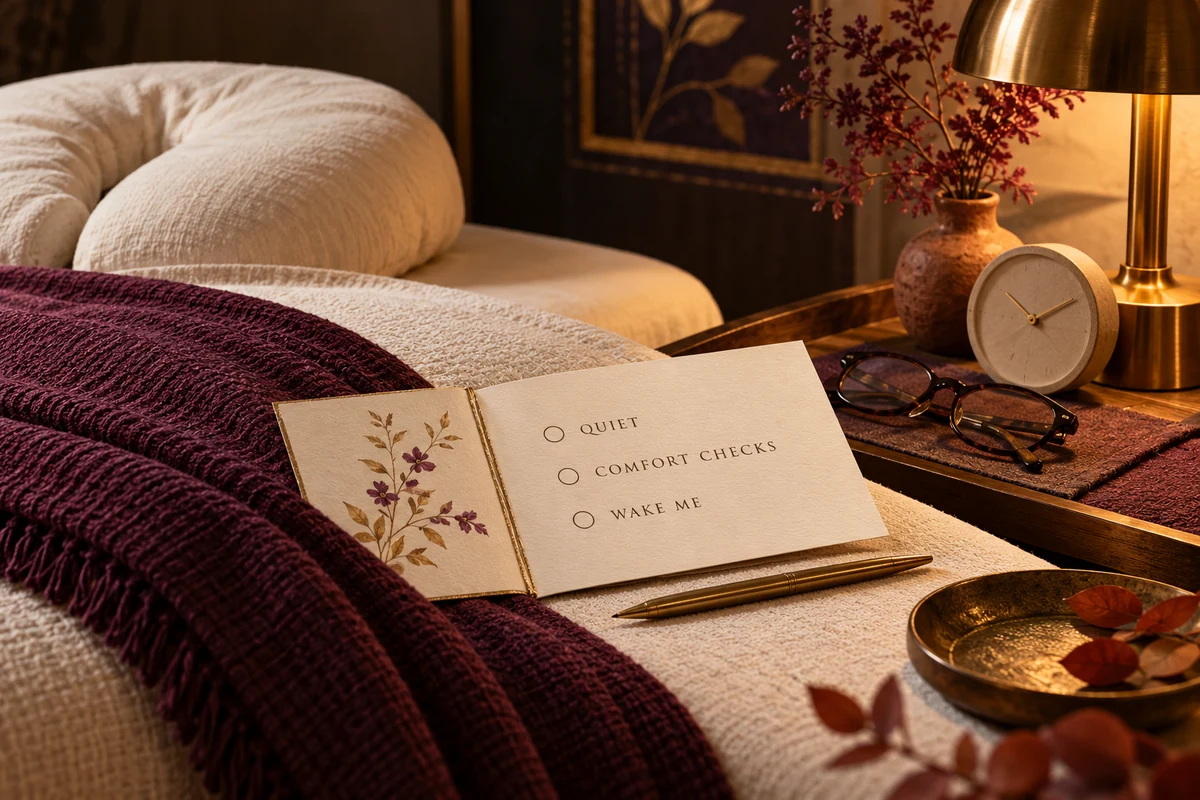
The useful preparation is a brief conversation, not an effort to force yourself to stay alert. Explain your preferred pressure and any areas you want avoided before you settle. Then agree what should happen if you become sleepy.
| Point to settle | A simple request | Why it is useful |
|---|---|---|
| Comfort checks | “Please still check that the pressure is comfortable.” | Quiet does not communicate everything |
| Repositioning | “Wake me before asking me to turn over.” | You know how a change of position will happen |
| The finish | “Please tell me clearly when we have finished.” | You do not have to guess whether to get up |
These are suggested requests, not a description of a fixed salon routine. The therapist can explain how their service works and agree the practical details with you.
Quiet does not replace communication
You can want a quiet session and still answer short questions about pressure, position or comfort. The American Massage Therapy Association's session guide describes your ability to request adjustments and stop a massage. Make use of that choice whenever you need it.
If you wake and something feels uncomfortable, say so immediately rather than waiting for the next question. You can ask to pause, adjust the support or finish. Drowsiness does not remove your preferences, and an earlier request for quiet should not stop you from speaking.
Our guide to talking during massage gives short phrases if you find it difficult to interrupt politely.
What if you snore or wake with a start?
If you know that you sometimes snore when relaxed, mention that concern in the conversation before treatment. Ask how the therapist will get your attention if they need a response. You do not need to promise that you will remain perfectly still or silent.
Avoid trying to solve a concern about sleeping position by arriving with an improvised restriction or asking for your head to be held in one place. Explain the practical issue and let the therapist discuss the support and positioning available within the service. A salon appointment is not a place to diagnose why you snore.
You can also choose to stay aware
Some people want to notice the massage throughout. That preference is just as valid as being happy to doze. Say at the beginning that you would like to stay engaged, and ask what kind of check-ins the therapist normally uses.
Do not judge the value of the appointment solely by whether you remember every moment. Equally, do not treat falling asleep as proof of a superior treatment. Decide afterwards whether the agreed comfort, coverage and communication matched what you wanted.
Give the end of the appointment room
Ask how you will be told the treatment is finished, then take the therapist's instructions for sitting up and dressing. AMTA describes being allowed to get up slowly and dress in privacy. That does not establish extra sleeping time after the booked service or an extended appointment if you doze.
If you need help, feel unwell or are unsure what to do, speak before standing. Avoid setting an elaborate alarm that may interrupt the session unexpectedly; first ask how the finish is normally handled.
Make the rest of the visit comfortable too
The back-massage clothing guide covers changing and draping questions, while eating before massage helps plan the appointment around a normal day. Neither requires you to turn the visit into a complicated ritual.
For Mesmerising Beauty at 77 High Street, Gosforth, use contact if you want to discuss resting or positioning before selecting current massage services and booking. The aim is an agreed appointment you can feel comfortable attending, whether you stay awake or drift off.
Frequently asked questions
Q: Is it rude to say I might fall asleep?
No. Mentioning it before treatment gives you and the therapist a chance to agree comfort checks, changes of position and the finish.
Q: Does falling asleep prove that a massage worked?
Sleep during an appointment is not a reliable quality score or proof of a health outcome. Consider whether the service matched your agreed preferences and comfort.