To clean under fingernails, include their undersides when washing with soap and water, using a nail brush if needed rather than digging at the skin. The CDC's everyday nail-hygiene guidance specifically includes soap and water, or a nail brush, underneath the nails. Ordinary handwashing is the starting point, not a special salon chemical.
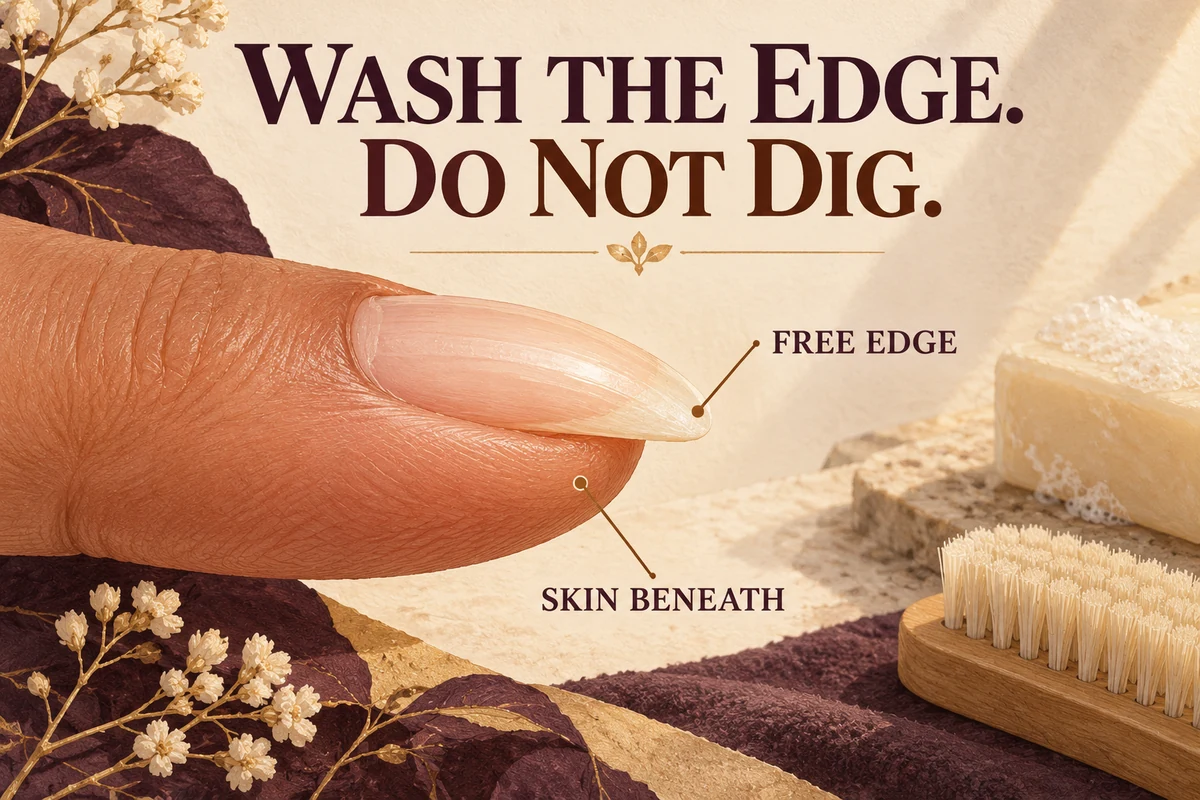
The visible free edge and the skin underneath are different things. Aim to wash away dirt without trying to create extra space between them.
Add the undersides to the wash you already do
You do not need a separate complicated routine for each nail. Make the area underneath part of washing your hands, rather than washing the palms and remembering the nails later.
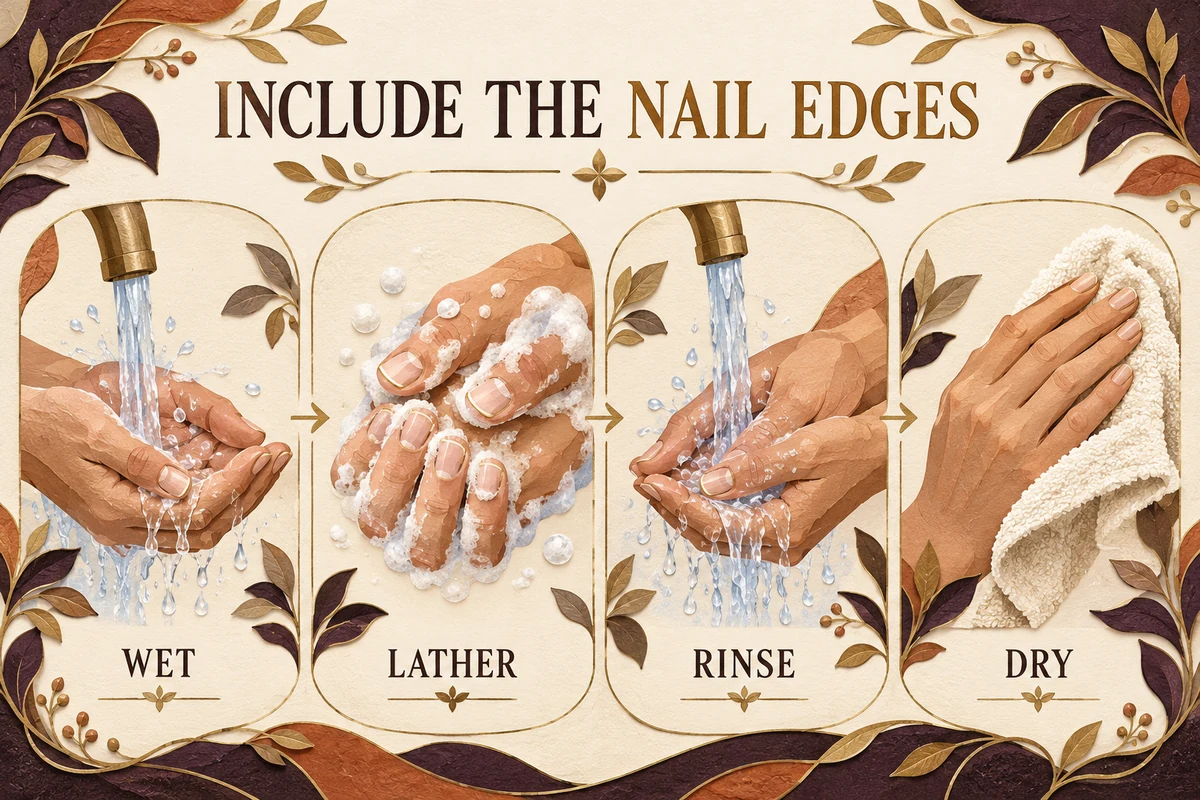
The CDC's handwashing steps are to wet, lather, scrub, rinse and dry. CDC advises scrubbing for at least 20 seconds, including the backs of the hands, between the fingers and under the nails. That interval covers washing the whole of both hands; do not spend it scrubbing a single nail.
- Wet your hands with clean running water and apply soap.
- Lather the hands, including the nail edges and undersides.
- Include those areas during the handwashing scrub; use a nail brush if needed.
- Rinse away soap and loosened dirt.
- Dry with a clean towel or an air dryer.
This is everyday cleaning. It does not establish a treatment for a nail condition or replace a workplace's own hygiene rules.
A brush is an option, not a reason to scrub harder
The CDC includes a nail brush as an option in its nail-hygiene advice; it does not require one particular brand. If you use a brush, choose and maintain it according to its instructions. It should help the washing routine, not become a tool for forcing away a mark that is not loose dirt.
Avoid using a needle, knife or improvised sharp point to chase material beneath the nail. You can clean a visible edge without deliberately lifting or separating the nail from the skin. If the process hurts or catches, stop rather than increasing pressure.
Our nail-filing guide covers a rough edge separately. The pointed end of a file is not a substitute for washing.
What changes if your nails are longer?
Longer nails make the underside more prominent, so remember it explicitly when washing. The CDC notes that more dirt and bacteria can gather beneath long nails than short ones and recommends keeping nails short and clean.
If you choose longer nails, do not assume polish makes them clean or that a shiny surface tells you what is underneath. For a routine example, after gardening, wash the undersides along with the rest of your hands before inspecting them. Repeatedly scraping at a dry edge is a different action from rinsing away loosened soil.
Artificial nails, a lifting coating or an unidentified product introduce additional questions. Follow the product or provider's care instructions rather than trying to push a cleaning tool underneath an enhancement. Our existing-coating booking guide explains what information to gather before asking a salon about removal.
Dirt and a persistent mark are different problems
A mark that remains after ordinary washing may need a different answer from “clean harder”. Do not assume its cause from the colour or from a photograph online. If it is unexplained, painful, changing, or accompanied by a change around the nail, seek appropriate healthcare advice.
A cosmetic manicure is not a diagnosis or treatment for that concern. You can still ask a salon what its current appointment includes, but do not book a cosmetic service as a substitute for assessment.
Mesmerising Beauty's nail-care page describes the current manicure and pedicure services at 77 High Street, Gosforth. Use the live treatment list for a cosmetic appointment, or contact the salon if you need to explain an existing coating before booking.
For a coated nail, distinguish the product first with the gel and regular polish comparison.
Frequently asked questions
Q: Does hand sanitiser remove visible dirt under nails?
A: Use soap and water when hands are visibly dirty. CDC's Hand Sanitizer Facts says sanitiser may be less effective on dirty or greasy hands; it is not a reason to skip the washing step.
Q: Do I have to buy a nail brush?
A: The CDC allows soap-and-water cleaning or a nail brush in its everyday advice. A brush can be useful, but a specific commercial kit is not the starting requirement.
Q: What if the underside still looks dark after washing?
A: Do not keep digging at it or assume it is dirt. An unexplained persistent mark or other concerning change deserves appropriate advice rather than more forceful cleaning.