By Mesmerising Beauty Team
Gosforth salon
Mesmerising Beauty is one salon at 77 High Street, Gosforth, NE3 4AA. Use the live treatment list before booking because service details, prices, and durations can change.
Fundamental Technical Differences
Microblading method: A trained technician uses a manual handheld tool with micro-needles to create tiny incisions in the skin's upper layers, depositing semi-permanent pigment that mimics individual brow hairs. It is a form of cosmetic tattooing — more subtle than traditional body tattoos — and it should only ever be carried out by a properly trained, insured practitioner.
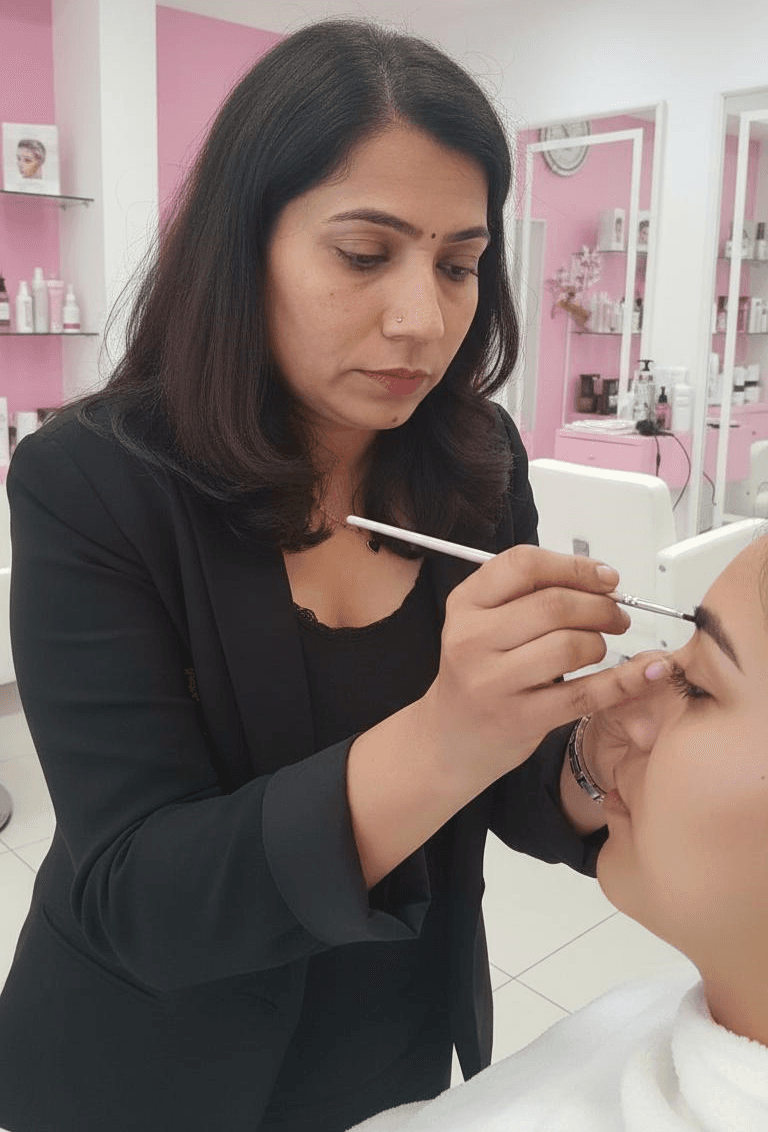
Hybrid brows method: A beauty therapist applies two types of temporary dye — henna and a traditional tint — to the skin surface and existing brow hairs. No skin penetration occurs; the products work purely topically, staining hair and temporarily colouring the skin.
This fundamental distinction affects everything from comfort to commitment, cost structure to maintenance, and who each treatment suits.
Duration and Longevity
Microblading lifespan: Results typically last a year or more depending on skin type, lifestyle and aftercare, and practitioners usually recommend periodic touch-ups. Exactly how long pigment holds varies considerably between individuals — a good practitioner will set expectations honestly at consultation rather than promising a figure.
Hybrid brows lifespan: Results are temporary. The henna skin staining usually softens within a few weeks, the tint on the hair lasts a little longer, and the whole effect fades gradually as hair naturally renews — timing varies from person to person.
This is the core trade-off: microblading offers long-lasting, semi-permanent results; hybrid brows offer weeks of temporary enhancement with no commitment.
Invasiveness and Comfort
Microblading: Because needles penetrate the skin, microblading involves some discomfort despite numbing cream, and slight bleeding and post-procedure tenderness are normal. Questions about pain management, healing and any personal medical considerations belong with the practitioner carrying out the procedure.
Hybrid brows: Non-invasive. Dyes are applied to the surface with no needles or incisions, and most clients find the appointment relaxing. As with any tint, a patch test before a first appointment is recommended.
For anyone uncomfortable with needles or invasive procedures, hybrid brows are the gentler-commitment option by a distance.
Cost Structure
We deliberately don't quote figures for either treatment here, because prices vary between providers and change over time.
Microblading involves a significantly higher upfront investment, plus periodic touch-ups — ask individual practitioners for their current pricing and exactly what's included.
Hybrid brows are a smaller per-visit cost repeated more often. Current hybrid brow pricing at Mesmerising Beauty is always on the live price list.
Which works out better for you depends on how you prefer to spread the cost, how committed you are to one look, and how your skin holds each treatment.
Permanence and Flexibility
Microblading commitment: The semi-permanent nature means you're committed to your brow shape, colour and thickness for a long stretch. Pigment fades gradually rather than disappearing on a schedule, and removing it early is its own involved process. Brow trends change, faces change with age, personal preferences shift — microblading locks in a look.
Hybrid brows flexibility: Completely temporary, which means freedom to adjust colour, shape and intensity at every appointment. Fancy bolder brows for winter and softer for summer, or want to experiment with shades? Easy. And if you try a style and don't love it, it simply fades over the following weeks, ready for something different next time.
Healing and Downtime
Microblading recovery: There is an initial healing period with specific aftercare — keeping the area dry, avoiding makeup on the brows, avoiding heavy exercise and swimming, and letting the skin flake and settle. The practitioner will give you their exact protocol, and final results only show once healing completes.
Hybrid brows recovery: Minimal aftercare — keep water off the brows for the first 24 hours, then cleanse gently. There is no healing period, results are immediate, and normal life carries on straight away.
For anyone unable or unwilling to accommodate an extended recovery period, hybrid brows' minimal downtime is a significant advantage.
Choosing Between Them
Microblading may suit you if you:
- Have very sparse brows with minimal natural hair
- Want long-lasting, low-maintenance results
- Rarely change your aesthetic preferences
- Are comfortable with an invasive procedure and its healing period
- Have had a proper consultation with a qualified practitioner
Hybrid brows may suit you if you:
- Have reasonable brow hair that needs enhancement
- Prefer temporary, flexible options
- Want to experiment with different styles
- Prefer smaller, spread-out costs to one large outlay
- Cannot accommodate downtime
- Would rather avoid needles altogether
Risks and Considerations
Microblading: As an invasive procedure, it carries the risks that come with breaking the skin, and certain medical circumstances can make it unsuitable. A reputable practitioner will take a full history, explain the risks honestly and carry out patch testing — and any personal medical questions should go to them or to your GP, not to a beauty salon.
Hybrid brows: Because nothing penetrates the skin, hybrid brows avoid the risks associated with invasive procedures. The main consideration is possible sensitivity to henna or tint, which is exactly why a patch test before a first appointment is standard practice.
Combining Approaches
Interestingly, the two aren't mutually exclusive. Some clients use hybrid brows to "test drive" a brow shape before committing to microblading. Others with existing microblading use hybrid brows to refresh colour between touch-ups or add temporary fullness. That compatibility offers useful flexibility for people interested in both approaches at different stages.
Experience Non-Invasive Hybrid Brows at Mesmerising Beauty
Mesmerising Beauty serves clients from one salon at 77 High Street, Gosforth, Newcastle upon Tyne, NE3 4AA.
For current treatment prices, appointment times, and availability, use the live booking route: