


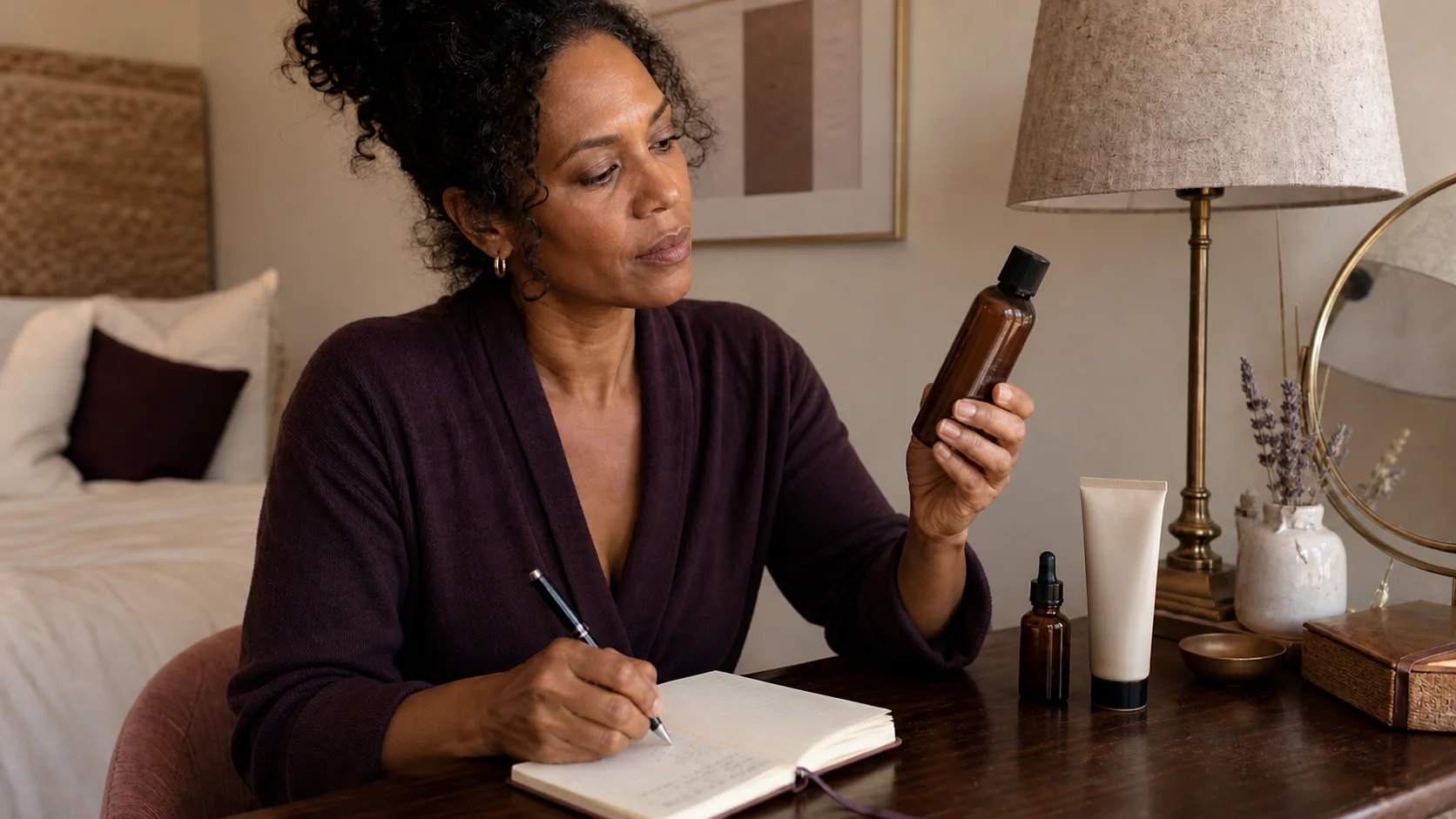
For a first facial, prepare facts rather than trying to diagnose your own skin. A one-minute note with your products, recent changes, treatment history and aim gives the therapist a clearer starting point.
Copy this one-minute facial note
Products I use now: [cleanser, moisturiser, SPF and any treatment products]
How often: [morning, evening, certain days or only when needed]
Recent changes: [new product, reaction, break, prescription or another treatment]
Treatment history: [facials or skin treatments that may be relevant]
My practical aim: [for example, understand the options or plan around an event]
My question: [makeup, preparation, product use or what to book]
You can write product names or take clear photographs of the front and ingredient label. You do not need to translate the list into salon terminology.
Why these details belong in the conversation
The UK's National Occupational Standards for facial skincare treatments include a current standard covering a person's treatment history, skincare regime and lifestyle when establishing the treatment plan. It also separates consultation and skin analysis from guesswork.
That standard is written for professionals. This note turns its useful inputs into something a client can prepare, without borrowing a treatment protocol or promising that one facial suits a particular concern.
Product names beat memory
“I use an acid” or “a strong serum” can leave out the detail the therapist needs. Record the exact name, how often you use it and the last time you used it. If a product is prescribed, label it as prescribed.
Do not stop prescribed skincare because a general article, comment or product page tells you to. Ask the prescriber or pharmacist before changing prescribed use, and contact the salon with the product details before booking if preparation may affect the appointment.
Recent changes can be more useful than a skin-type label
You may not know whether your skin is “dry”, “oily”, “combination” or something else. Instead, write down what has changed in ordinary language:
- a new product or change in frequency;
- a recent facial or other skin treatment;
- a product that felt uncomfortable;
- a change you can see or feel;
- a date or event that affects your diary.
This is observation, not diagnosis. If you have a medical concern, a beauty appointment does not replace advice from an appropriate healthcare professional.
Ask about makeup before choosing the time
Do not assume you must arrive in a particular way. Ask whether the service you are considering has any makeup or skincare preparation. An accurate answer may make a morning, lunchtime or after-work appointment easier to plan.
A useful message is:
“This would be my first facial. I use [product names] and recently [short change]. Is there anything you need me to do about skincare or makeup before I choose an appointment?”
Choose from the current service list
Mesmerising Beauty currently has a facials service route. Review the current treatment list rather than relying on an older article's price or treatment description. The note helps the conversation; it does not select a treatment for you.
Frequently asked questions
Q: What should I tell a facial therapist about my skincare?
A: List the products you currently use, how often you use them, recent skin or routine changes, relevant treatment history and what you want help deciding. Product names or clear label photographs are more useful than guessing ingredients.
Q: Should I stop skincare before a facial?
A: Do not stop a prescribed product on the strength of a general blog. Give the salon the exact product details and ask what applies to the facial you are considering; ask the prescriber or pharmacist before changing prescribed use.
Q: Should I remove makeup before a facial?
A: Ask the salon what it wants for the appointment you plan to book. If the answer affects travel from work or another commitment, confirm it before selecting a time.