
By Mesmerising Beauty Team
Gosforth salon
Mesmerising Beauty is one salon at 77 High Street, Gosforth, NE3 4AA. Use the live treatment list before booking because service details, prices, and durations can change.
Polish Removal and Initial Preparation
The manicure begins by removing whatever is currently on the nails. Regular polish wipes away easily with remover-soaked pads, while gel polish needs a proper soak-off — acetone-soaked wraps sit on each nail for ten to fifteen minutes to break the cured gel down before it's gently eased away. Thorough removal matters: anything left behind stops the new application adhering properly and hides the nail's true condition.
With clean nails, your therapist takes a good look at nails and cuticles before starting. If anything looks unusual — damage, discolouration, anything that seems more than cosmetic — a good therapist will say so honestly and suggest a pharmacist or GP where appropriate, rather than simply polishing over it. Hands are then washed with a gentle cleanser so the treatment starts from a clean, hygienic base.
Soaking and Softening
Hands soak in warm water — often with a gentle cleanser or a few drops of oil added — for five to ten minutes. This softens the cuticles so they can be tidied safely, makes the skin more pleasant to work with, and marks the point where the appointment starts to feel like a treat rather than an errand.
Temperature is a small detail that shows care: comfortably warm, never hot. Some manicures upgrade the soak with extras such as milk-and-honey blends, sea salt, or aromatherapy oils — pleasant touches that make the softening stage feel more indulgent.
Nail Shaping
Once softened, shaping begins. Your therapist files in consistent single-direction strokes rather than sawing back and forth, which protects the nail edge from the tiny splits that lead to peeling and breakage later.
Shape is a genuine choice, and a good therapist will advise based on your nail beds, finger shape, and lifestyle. Round shapes suit shorter nails and busy hands. Square gives a crisp, modern line but wants a little length. Squoval — square with softened corners — is the popular middle ground. Almond and stiletto shapes elongate beautifully but need length and more careful living.
File grit matters too: coarser grits take down length efficiently, finer grits smooth and refine. Using the right file for each stage is one of those quiet professional habits that separates a careful manicure from a rushed one. A light, conservative buff finishes the preparation — enough to smooth ridges for an even polish surface, never so much that the nail plate is thinned.
Cuticle Care
Cuticle work is the most skill-intensive stage. A cuticle remover solution goes on first and sits for two to three minutes, softening the layer of dead tissue that gradually builds up on the nail plate — this is what gets tidied, not the living skin.
Using a wooden or rubber-tipped pusher, the therapist gently eases the cuticles back toward the nail base, revealing a cleaner, longer-looking nail. The touch here is deliberately light; pressing hard achieves nothing good. Nippers then trim only obvious dead tissue and hangnails, with sterilised tools and a trained eye for what should be left well alone. Finally, cuticle oil is massaged in around each nail, leaving the whole area conditioned and neat.
Exfoliation and Massage
A hand scrub — sugar or salt based — works over the hands and lower arms in circular motions, lifting dull surface cells and smoothing rough spots like knuckles. After rinsing, skin looks brighter and feels noticeably smoother, and moisturiser applied afterwards can actually sink in.
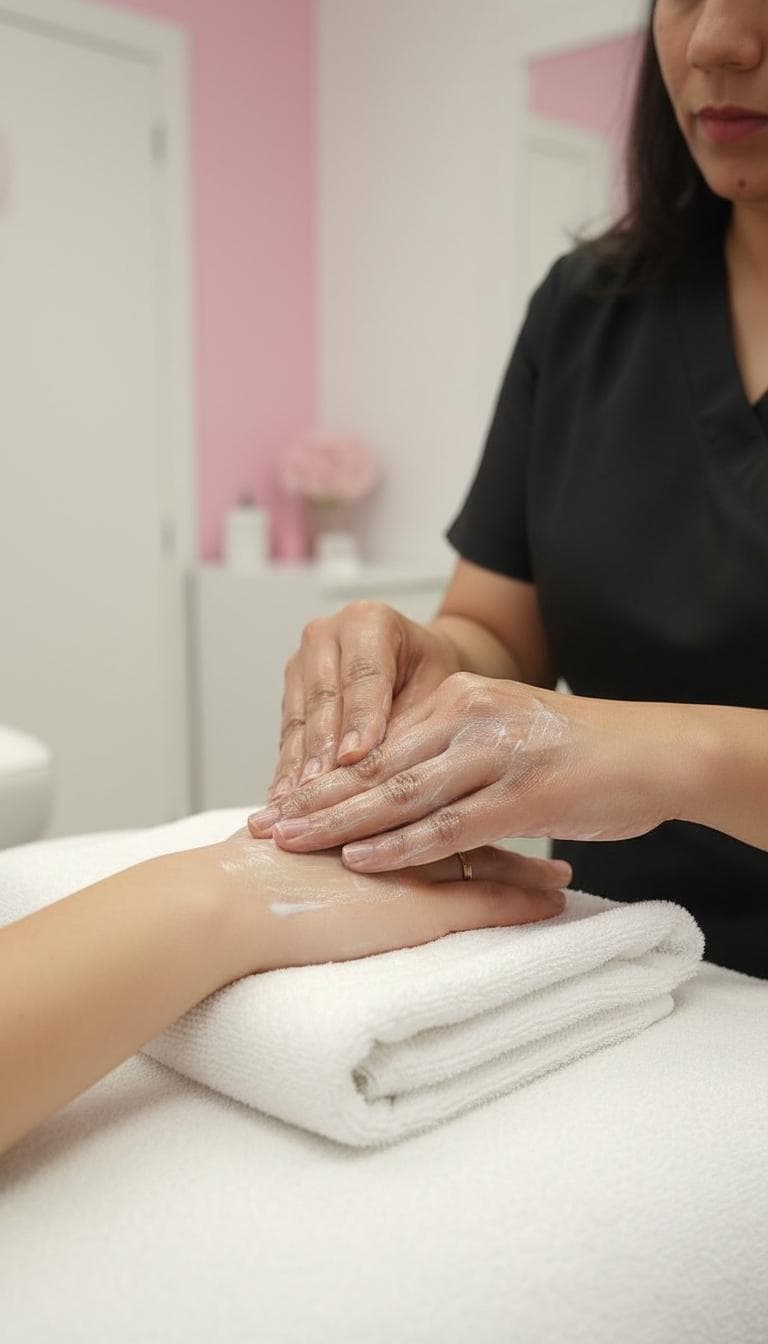
Then the massage: five to ten minutes with a rich cream or oil, covering palms, each finger individually, wrists, and forearms. For most clients this is the moment the shoulders finally drop. We'll happily call it what it is — a genuinely relaxing few minutes that works moisturiser deep into hard-working skin — without wrapping it in grand claims. Hands that get washed all day simply appreciate it.
Polish Application
Before colour, nails are wiped with a prep solution so no trace of oil interferes with adhesion. Base coat follows — the unsung hero that protects nails from staining, smooths minor imperfections, and helps colour grip.
Colour goes on in two thin coats, never one thick one. Thin coats level out smoothly, dry more reliably, and wear better. Each coat uses the same tidy pattern — one stroke down the centre, one down each side — for edge-to-edge coverage without flooding the cuticles, with a minute or two of drying between coats.
Top coat seals and glosses the finish, wrapping slightly over the nail tips — "capping" — because free edges are where wear begins. How long the finished manicure lasts varies genuinely from person to person and depends on what your hands do all day, so treat any promised number of days with suspicion; careful technique simply gives the polish its best chance.
Final Details and Aftercare
Any stray polish on skin or cuticles is cleaned up precisely with a small brush or wrapped wooden stick, without disturbing the finished nails. Your therapist will then talk you through the drying window: surface-dry comes quickly, but polish keeps hardening for a good while afterwards, so gentleness with your hands for the first hour is time well spent.
Sensible aftercare keeps everything looking good between visits: avoid very hot water and harsh cleaning products in the first day, use cuticle oil daily, wear gloves for washing up and cleaning, and moisturise often. Small habits, big difference.
How Long a Manicure Takes
Timing depends on what you book. A quick file-and-polish is the express option; a full classic manicure with the complete soak, cuticle work, scrub, massage, and polish takes comfortably longer; and gel colour adds curing time under the lamp for each layer. If you're pairing it with other treatments — a pedicure is the natural partner, and we've compared the two honestly in Which is better, a manicure or a pedicure? — allow yourself a properly unhurried visit. The one scheduling mistake to avoid with regular polish is booking something immediately afterwards that involves handbags, car keys, and haste.
Regular Polish or Gel Colour?
Both finishes follow the same careful preparation — the difference is what happens at the colour stage. Regular polish air-dries, changes easily at home, and suits anyone who likes to switch shades often. Gel is cured under a lamp layer by layer, so it's completely hard by the time you leave, with a glassy shine that holds its look between appointments. The honest caveats: gel must be removed by proper soaking, never peeled — peeling takes nail layers with it — and how long either finish stays looking perfect varies from person to person and hand to hand, so we'd rather set that expectation truthfully than promise a magic number of days. If you're weighing up the wider menu beyond colour choice, our guide to which type of manicure walks through the options.
Hygiene Standards Worth Noticing
The hygiene of a nail service should be visible. Look for metal tools that come from a steriliser rather than a drawer, files and buffers that are fresh or single-use, clean towels at each station, a tidy workspace, and a therapist who washes their hands before starting. At Mesmerising Beauty we treat questions about hygiene as a compliment rather than a challenge — the clients who ask are exactly the clients who notice careful work everywhere else too.
What to Tell Your Therapist Before You Start
A good manicure is a small collaboration, and a few details from you sharpen the result: any allergies or product sensitivities; what your hands do all day, because a gardener and a pianist need different advice on shape and length; whether there's an occasion coming up or you just want easy upkeep; and anything about your nails that's been bothering you. If something on a nail looks like more than a cosmetic matter, a trustworthy therapist will say so and point you to a pharmacist or GP rather than polishing over it — that honesty is part of the service, not a departure from it.
When you're ready to put your hands in professional care here in Gosforth, you can book online or browse the current price list — and if you're still deciding exactly what to ask for, what a manicure service includes is a good next read.
Manicures at Mesmerising Beauty
Mesmerising Beauty serves clients from one salon at 77 High Street, Gosforth, Newcastle upon Tyne, NE3 4AA.
For current treatment prices, appointment times, and availability, use the live booking route: