
By Mesmerising Beauty Team
Gosforth salon
Mesmerising Beauty is one salon at 77 High Street, Gosforth, NE3 4AA. Use the live treatment list before booking because service details, prices, and durations can change.
Two Different Jobs: Medical Care vs Cosmetic Grooming
The words sound similar, but a podiatry appointment and a salon pedicure are doing fundamentally different jobs. A podiatrist is a regulated healthcare professional trained to diagnose and treat conditions of the feet and lower limbs. A salon pedicurist is a beauty professional trained in grooming, presentation, and hygiene. Neither is a substitute for the other, and the best outcome usually comes from understanding which one your feet actually need — sometimes it's both, at different times.
What a Podiatrist Does
Podiatrists work in clinical settings with clinical sterilisation standards, and their focus is foot health. They assess and treat conditions such as ingrown toenails, thickened or damaged nails, corns, problem calluses, and skin complaints, and they carry out the kind of assessment — checking circulation, sensation, and foot structure — that no salon is trained or equipped to do. Some podiatrists and foot health practitioners offer appointments marketed as "medical pedicures", which combine that clinical care with a degree of finishing and tidying.
Podiatric care matters most for people whose feet need more than grooming: those living with diabetes, anyone with reduced sensation or circulation concerns, people with recurrent ingrown toenails, or anyone with a nail or skin problem that's painful, changing, or simply worrying them. If any of that sounds like you, a podiatrist or your GP is the right first port of call — before a salon appointment, not instead of asking.
What a Salon Pedicure Offers
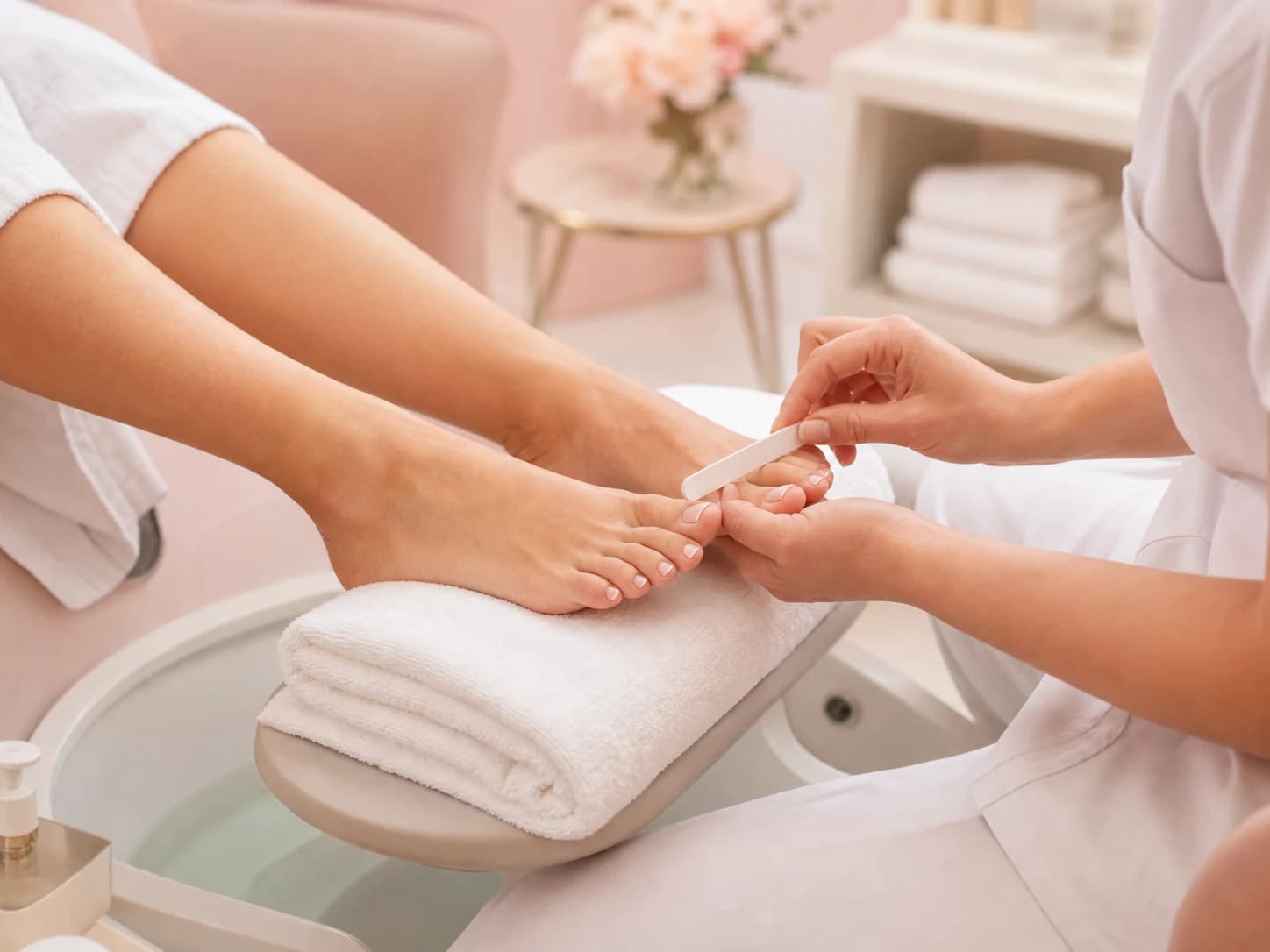
A salon pedicure is comprehensive cosmetic care for generally healthy feet. At Mesmerising Beauty that means a warm soak, toenail trimming and shaping, cuticle softening and tidying, conservative hard-skin reduction, exfoliation, an unhurried foot and calf massage with rich moisturiser, and polish if you'd like it — all in a setting designed for relaxation rather than clinical efficiency.
The value here is different from podiatry's value: neat, well-presented feet, smoother and more comfortable-feeling skin, and a genuinely pleasant hour. Salons maintain careful hygiene — sterilised metal tools, single-use files, clean workstations — but a salon is not a clinic and doesn't claim clinical sterility, which is one more reason feet with active medical problems belong with a podiatrist first.
When to See a Podiatrist Before Booking With Us
We'd rather lose a booking than work on feet that need medical attention. As honest guidance, speak to a podiatrist or your GP before booking a salon pedicure if any of these apply: you have diabetes or have been told you have reduced sensation or poor circulation in your feet; you have a painful, ingrown, or bleeding toenail; a nail has noticeably changed colour, thickness, or shape; you have cracked skin that bleeds or any sign of infection; or you have foot pain that a pedicure obviously won't fix. Once anything medical has been looked after and you've been given the all-clear, we'd love to look after the grooming side.
Using Both, Sensibly
Plenty of people use both services in a way that makes sense: podiatry when something needs treating or checking, salon pedicures for regular upkeep and presentation in between. If you see a podiatrist, tell them you have salon pedicures — and tell us about any podiatric care you're receiving. That open communication lets both sides work sensibly around each other, and it means we can adapt what we do (or hold off entirely) when your podiatrist advises it.
How the Training and Regulation Differ
In the UK, podiatry is a regulated healthcare profession: podiatrists complete a degree in podiatry and register with the Health and Care Professions Council before they can practise under that title. Their world is clinics, assessments, treatment plans, and medical record-keeping. A salon pedicurist trains in beauty therapy — nail care technique, skin and hygiene fundamentals, product knowledge, and the practical craft of a comfortable, beautifully finished treatment. Neither training is a lesser version of the other; they simply point at different jobs. The tools may even look similar at a glance, but one set is being used as part of clinical treatment and the other as part of grooming, and the standards each profession works to reflect exactly that.
That difference in regulation is also why the two professions describe their work so differently. A podiatrist can assess, diagnose, and treat. A salon can groom, tidy, soften, and polish. If you ever hear a salon using confident medical language about what it can do for feet, treat that as a warning sign rather than a selling point — the trustworthy ones describe grooming as grooming and refer the rest.
What a "Medical Pedicure" Actually Means
The phrase "medical pedicure" — sometimes "medi-pedi" — isn't one fixed, standardised service. It generally describes clinical foot care carried out by a podiatrist or foot health practitioner which also leaves the feet neat and presentable: nails reduced and shaped with clinical instruments, hard skin addressed with clinical techniques, and anything questionable assessed by someone qualified to deal with what they find. The setting is the giveaway — clinical sterilisation standards, single-use items where appropriate, and a practitioner working to healthcare protocols rather than salon ones.
If that's what your feet need, our genuine advice is simple: look for podiatry or foot health clinics locally, check the practitioner's registration, and ask the clinic directly what their appointment includes, because inclusions vary a good deal from clinic to clinic.
The Questions We Ask Before Every Pedicure
Because the boundary matters, a careful salon builds it into the booking. Before a pedicure at Mesmerising Beauty we ask about the things that change our advice: diabetes, any reduced sensation or circulation concerns you've been told about, allergies, anything on your feet that's been painful or changing, and any care you're already receiving from a podiatrist. None of this is nosiness — it's routing. Most clients sail straight through to the warm foot soak; occasionally the right answer is "let's get that looked at first, and we'll do the pampering afterwards". Either way, you get an honest answer rather than a treatment that shouldn't have gone ahead.
How to Choose for Your Situation
Here's a simple way to decide. If your feet are essentially healthy and what you want is tidy nails, softer-feeling skin, a proper massage, and an unhurried hour in Gosforth — that's a salon pedicure, and we'd love to see you; you can book online whenever suits. If something hurts, bleeds, looks different than it used to, or you've been advised to have your feet checked regularly — that's a podiatrist or your GP first. And if you're genuinely unsure which side of the line you're on, ask a pharmacist or your GP practice before booking anything; a quick question costs nothing and settles it.
Professional Boundaries — and Why They Protect You
A reputable salon knows where its training ends. We will not attempt to treat ingrown toenails, work on feet with suspected infections, or carry out anything resembling a medical procedure — not because we don't care, but because the caring thing is a referral to someone qualified. Equally, podiatrists tend to be perfectly happy for their patients to enjoy salon pedicures once feet are healthy; the two professions complement each other when everyone stays in their lane.
On cost: salon and podiatry prices aren't comparable because the services aren't comparable. For our current pedicure prices, check the price list; for podiatry fees, ask the clinic directly.
Salon Pedicures at Mesmerising Beauty
Mesmerising Beauty serves clients from one salon at 77 High Street, Gosforth, Newcastle upon Tyne, NE3 4AA.
For current treatment prices, appointment times, and availability, use the live booking route: